You’ve probably used Claude to write code, summarise documents, or debug a gnarly stack trace. But what if Claude could talk directly to your database to read and write data, run queries, manage collections, and perform bulk operations, all without you writing a single line of code?
That’s exactly what the Model Context Protocol (MCP) makes possible. In this tutorial, you’ll connect Claude Desktop to Astra DB to create a document collection, insert and retrieve documents, and perform bulk updates entirely through natural language!
Wait, what is MCP?
MCP (Model Context Protocol) is an open standard that lets AI assistants connect to external tools and data sources. Think of it as a USB-C port for AI: a single, consistent interface that lets Claude plug into databases, APIs, file systems, and more.
Without MCP, Claude only knows what you paste into the chat window. With MCP, Claude becomes an active agent — it can read from and write to real systems as part of the conversation.
Astra DB is an enterprise distribution of Apache Cassandra deployed as a fully-managed service running on a public cloud of your choice. Astra DB ships with an MCP server out-of-the-box which exposes the database as a set of tools Claude can call directly: creating collections, inserting records, running vector searches, and more. The entire conversation becomes your interface.
Prerequisites
- Claude Desktop installed
- Node.js 18 or later installed (
node --versionto check) - A free Astra DB account (sign up here, no credit card required)
Step 1: Create your Astra DB database
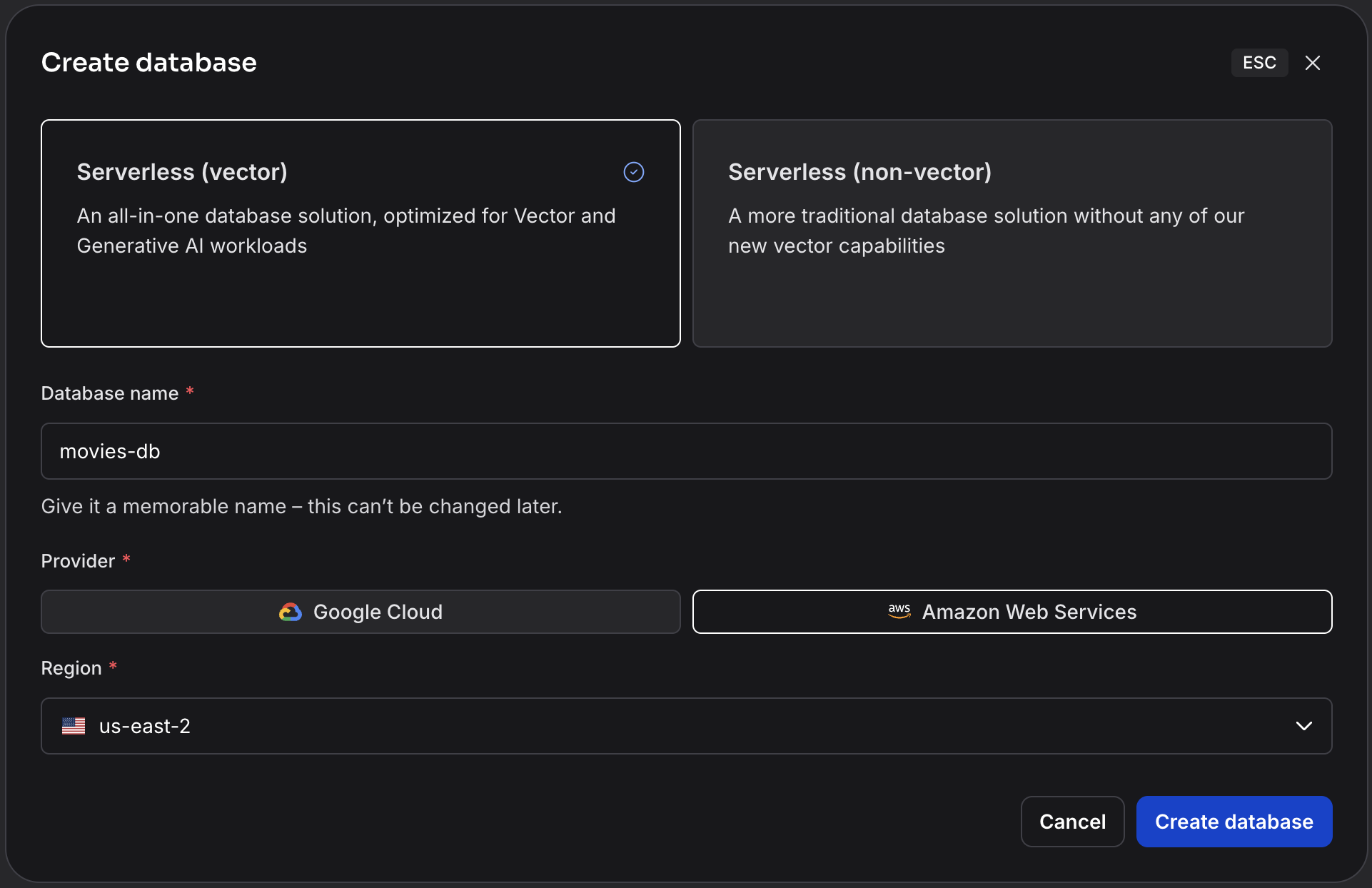
Sign in to astra.datastax.com and create a new Serverless (Vector) database.
Give the database any name you like (e.g. movies-db) and wait for it to become active. This usually takes about two minutes.
Step 2: Get your DB credentials
You need two things to connect to your database: an application token and the API endpoint. From the Astra DB portal, select your database.
Copy the API_ENDPOINT field. It looks something like https://*.apps.astra.datastax.com.
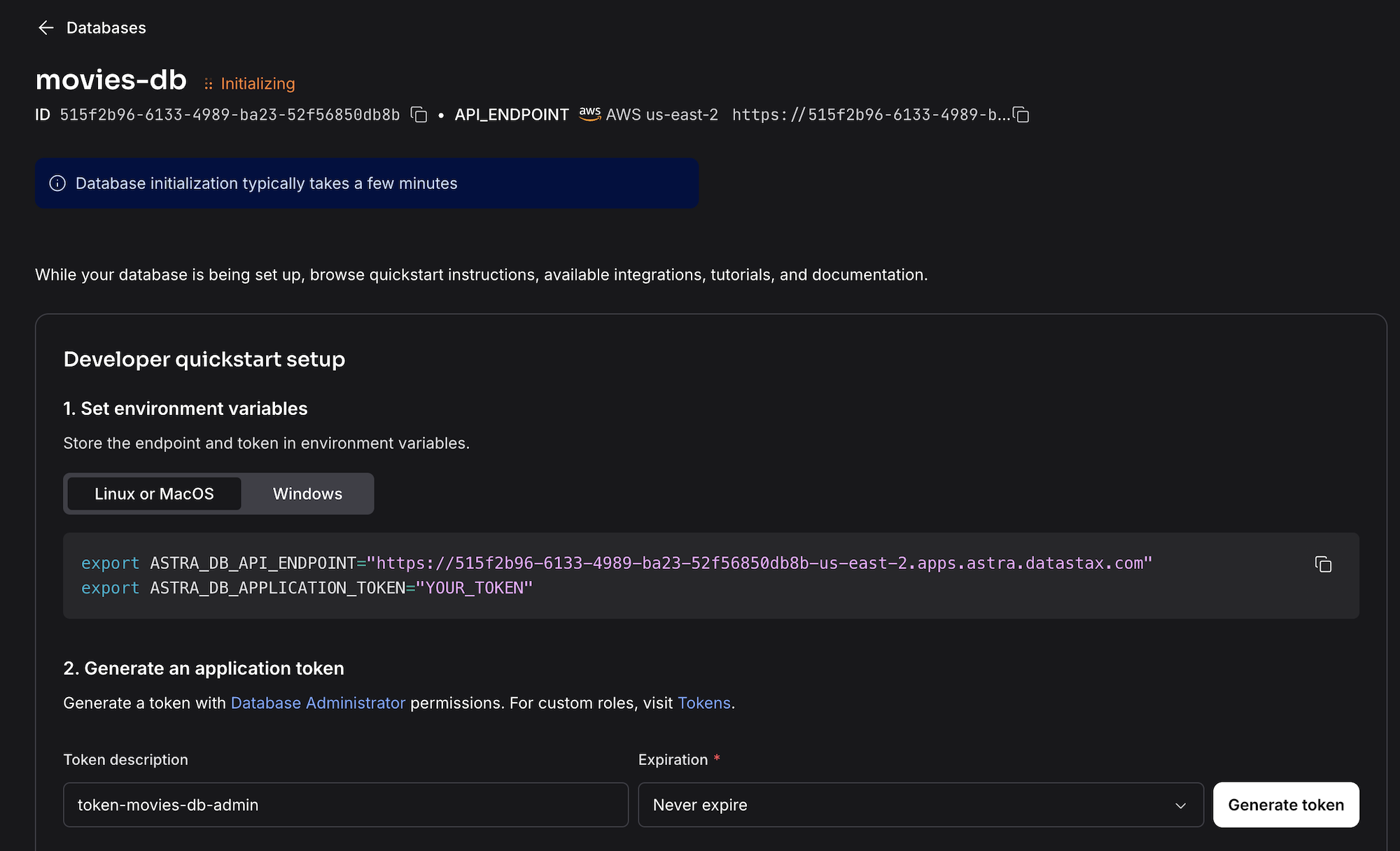
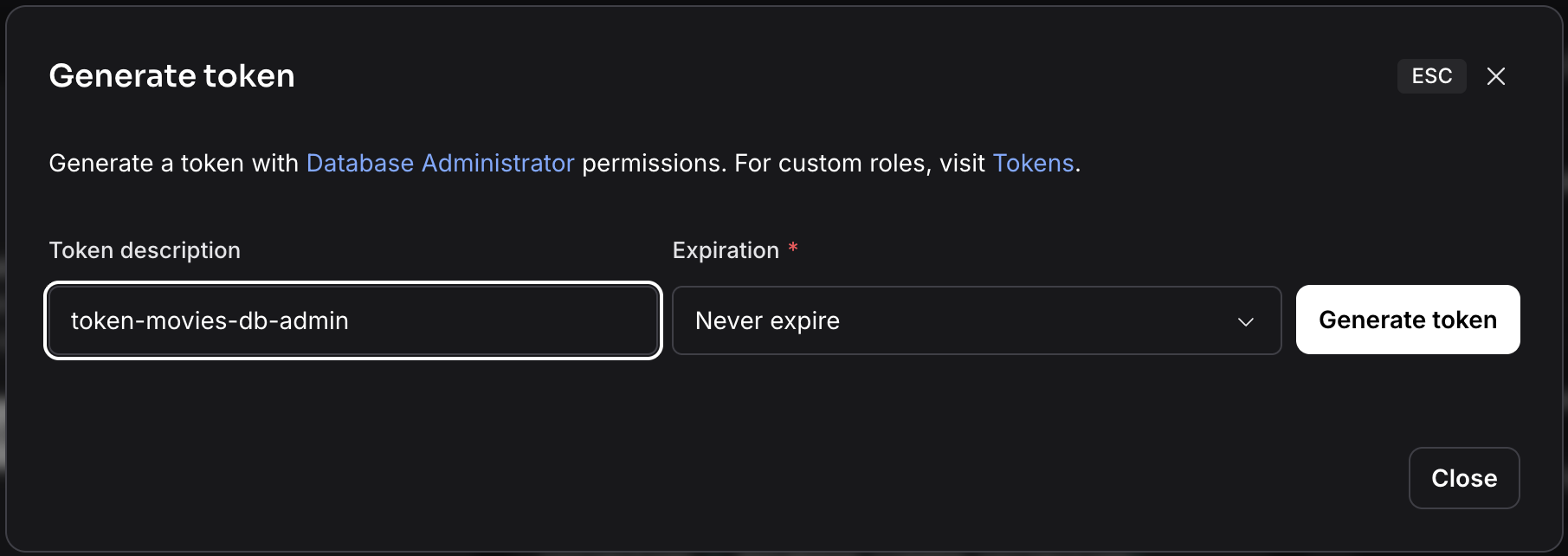
Then click the Generate Token button to generate an application token with a DB admin role. Save the new token in a safe place. It looks something like AstraCS:....
Step 3: Connect Claude Desktop to your Astra DB MCP server
Open your Claude Desktop configuration file. The location depends on your operating system:
- macOS:
~/Library/Application Support/Claude/claude_desktop_config.json - Windows:
%APPDATA%\Claude\claude_desktop_config.json
If the file doesn’t exist yet, create it. Add the following, replacing the placeholder values with your actual token and endpoint:
{
  "mcpServers": {
    "astra-db-mcp": {
      "command": "npx",
      "args": ["-y", "@datastax/astra-db-mcp"],
      "env": {
        "ASTRA_DB_APPLICATION_TOKEN": "AstraCS:your_token_here",
        "ASTRA_DB_API_ENDPOINT": "https://your-endpoint_here.apps.astra.datastax.com"
      }
    }
  }
}
Windows users: npx is a batch command on Windows. Use this modified version instead:
"command": "cmd",
"args": ["/k", "npx", "-y", "@datastax/astra-db-mcp"]
Save the file, then fully quit and relaunch Claude Desktop.
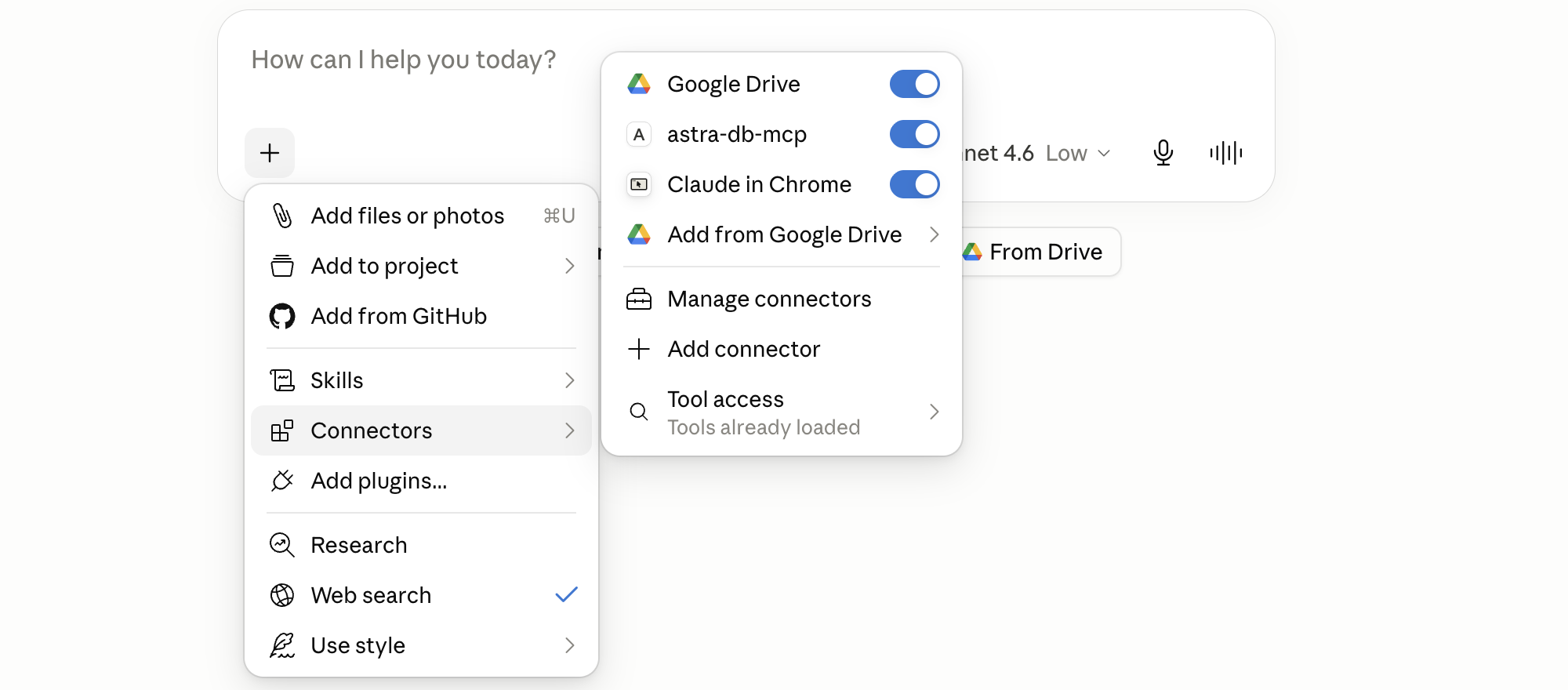
And that’s it for setting up your environment. If configured correctly, you should see the Astra DB MCP connector enabled in Claude Desktop.
Talk to your database
Now that you’ve got Claude Desktop configured, the fun part starts.
New collection
First, let’s create a new collection of movies. Open a new conversation in Claude Desktop and type:
Create a new collection called `movies` then keep checking if it has been created.
Let me know when it has been created.
Claude will search for the tools required to execute the request and use the astra-db-mcp connector. Then it will call the CreateCollection tool to create the new collection and use the GetCollections tool for verification.
Claude then responds with a confirmation that the collection is ready.
Load movies
Now ask Claude to populate the collection with sample movies. You can have fun with which movies you want to load but here’s an example:
Insert 10 mainstream movies from the last 10 years to the `movies` collection.
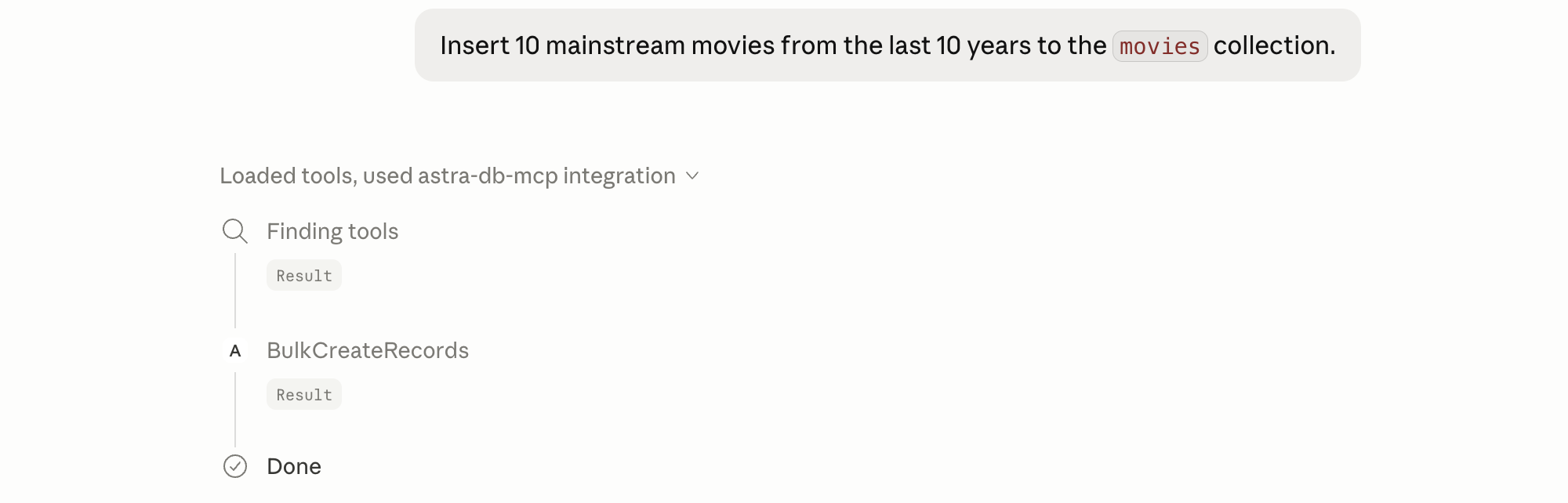
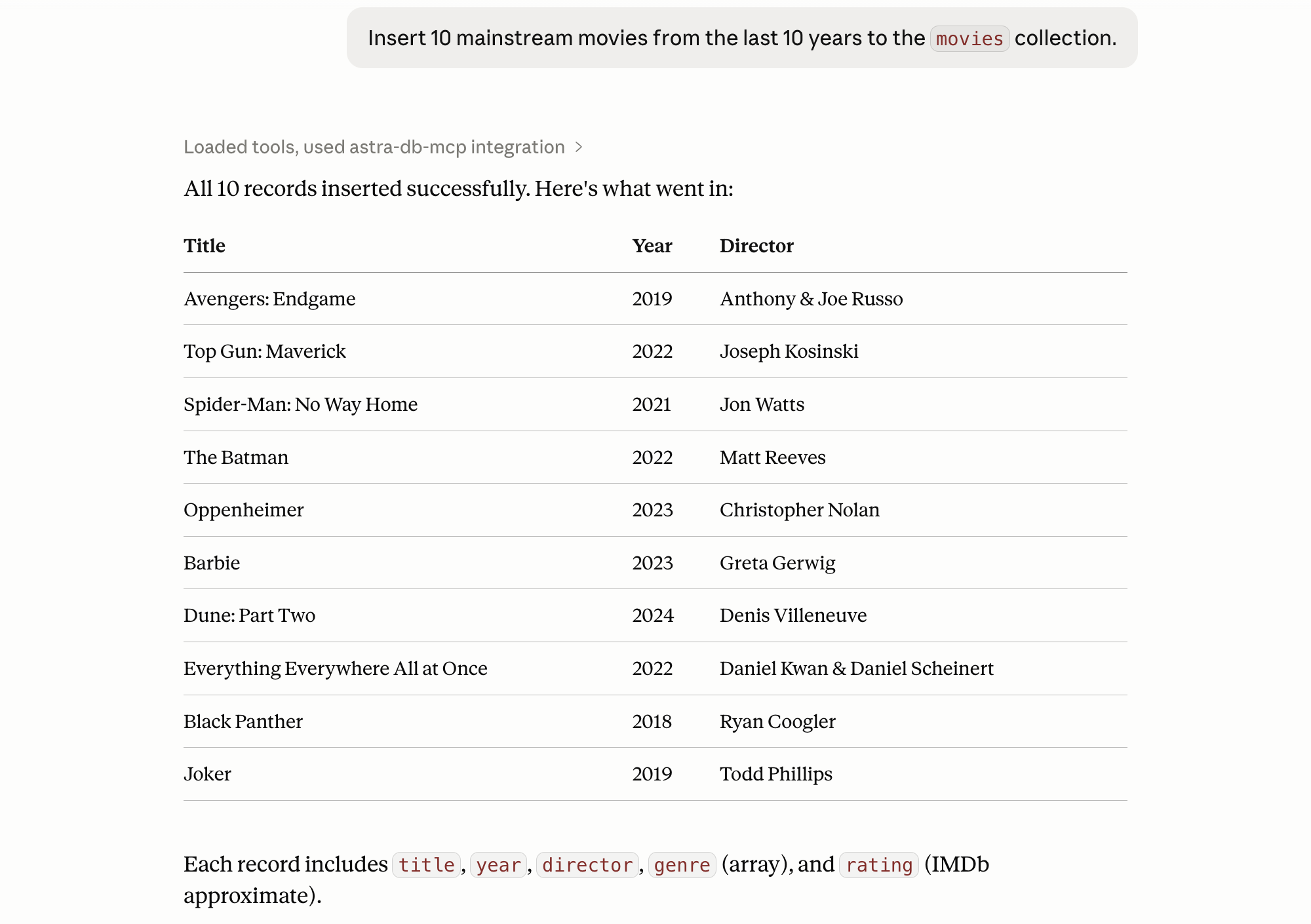
Claude will call BulkCreateRecords to insert all ten movies at once. In this example, Claude generated movie data which includes the title, release year, director, genre and IMDB rating.
What just happened?
Claude translated your natural language requests and mapped them to the right tools it needed to execute queries against the database, it interpreted the results, and presented those results in a very useful way.
Claude was the interfacing client to your Astra DB’s MCP server, interpreting inputs and outputs without you writing code.
Let’s try to do more with the database.
Extend the schema
Ask Claude to show us the fields in our collection:
Describe the fields of the `movies` collection.
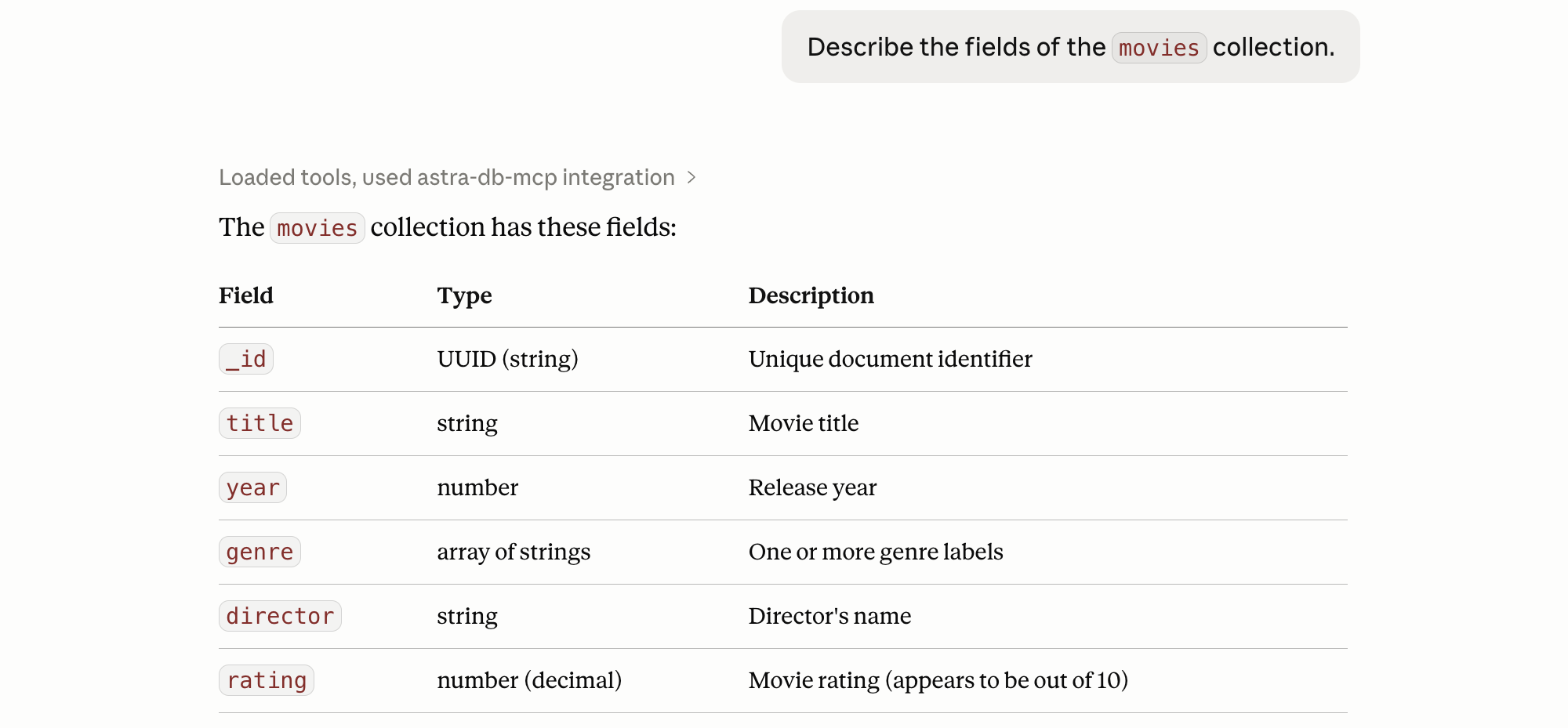
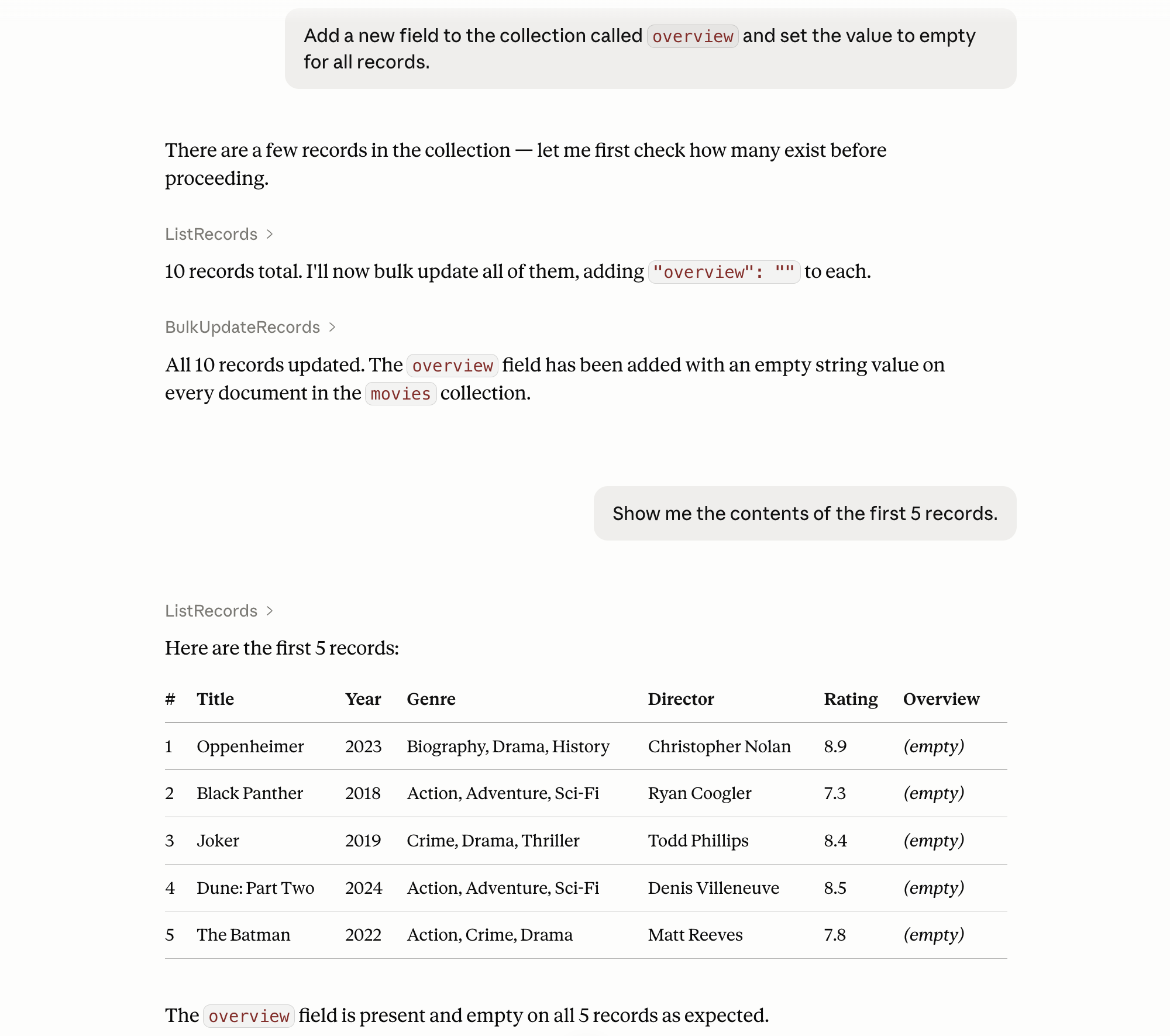
Let’s try to add a new empty overview field:
Add a new field to the collection called `overview`
and set the value to empty for all records.
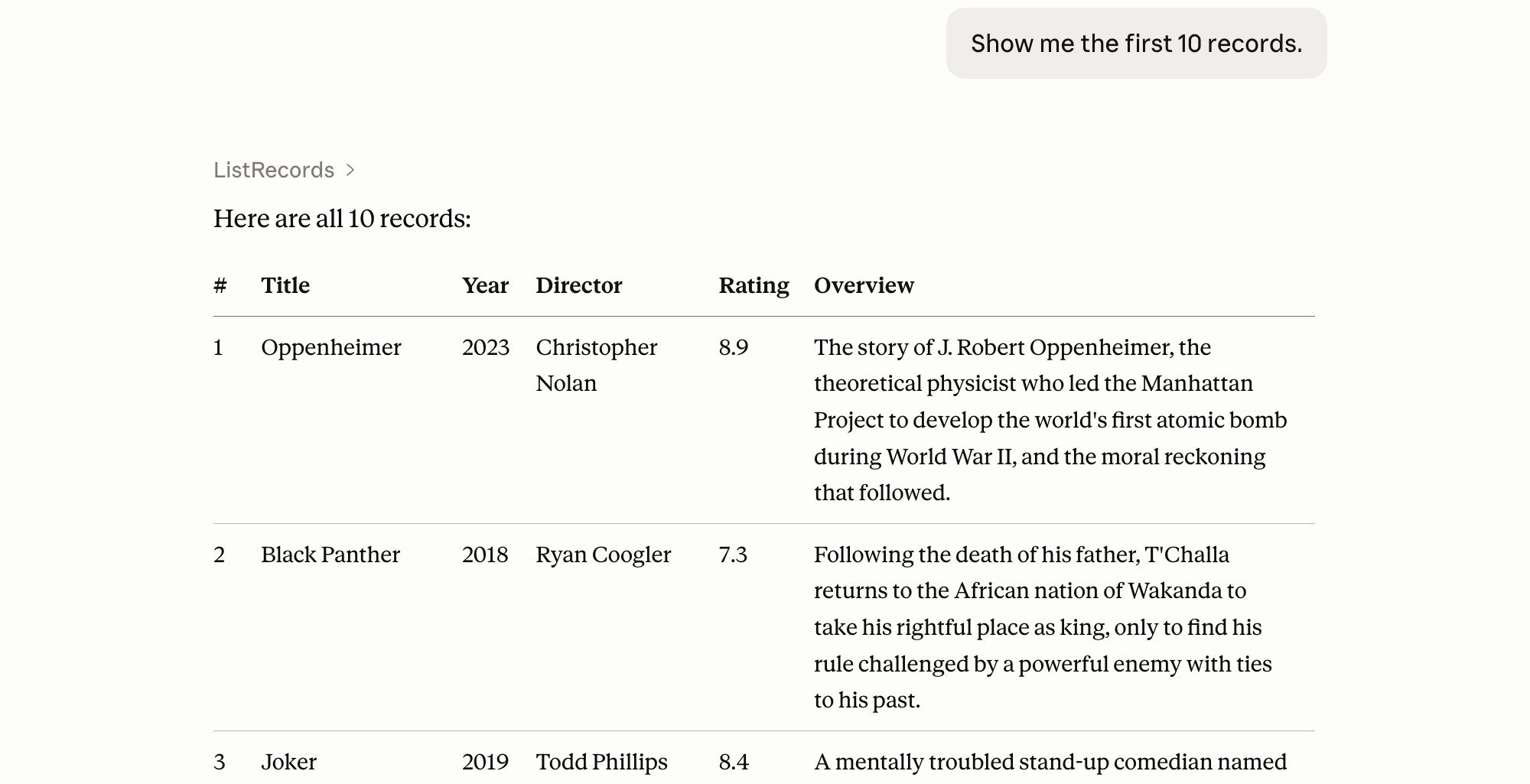
Now ask Claude to generate an overview for each movie and update the records:
For each movie in the collection, generate an overview
then update the `overview` field one record at a time.
And just like that, the movies now have overviews included. Here’s what the entry for Oppenheimer looks like:
Add a more complex data type
Let’s see if we can stretch the MCP tools a bit further by adding something more complex like cast members:
For each movie, generate a maximum list of 3-5 leading actors
and their corresponding character then update each record one at a time.
Add a new `cast` field with an ordered array of objects,
each with the `actor` and `character` as keys.
Let’s see the results:
Show me 5 movies, but only include the movie title, release year and cast members.
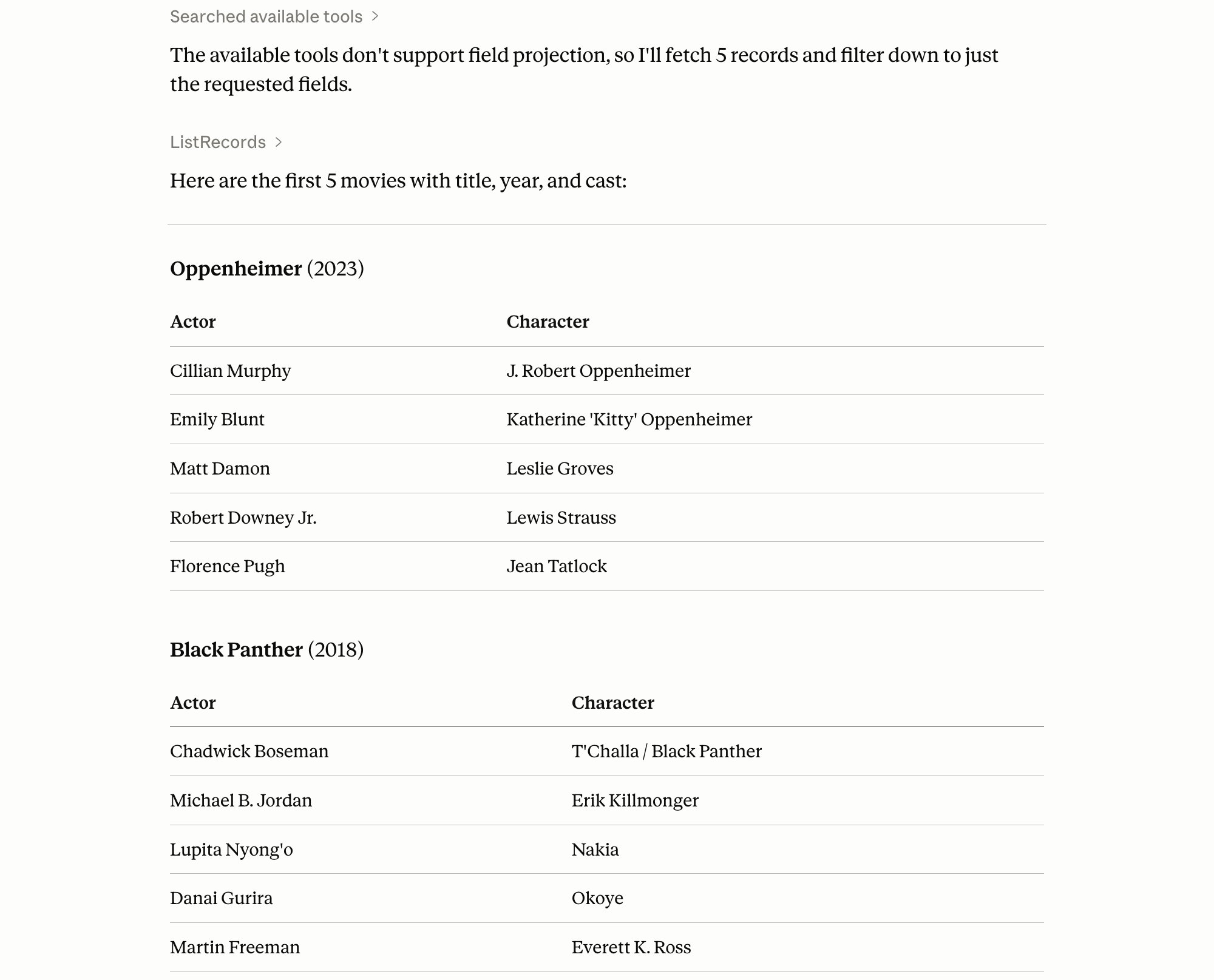
Claude is quite clever here, filtering the results on the client-side and only showing the requested fields.
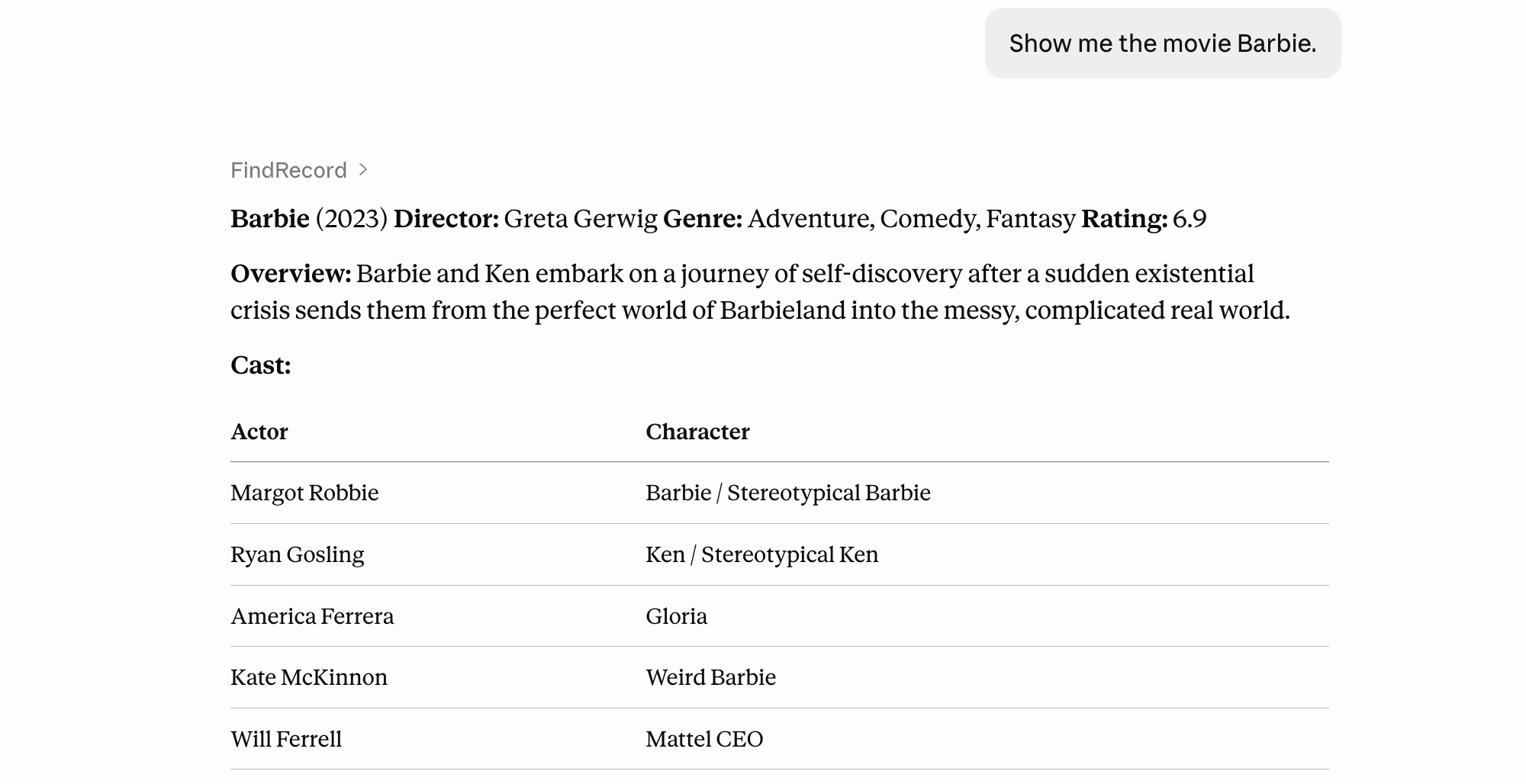
In another example when I asked to see the listing for the movie Barbie, Claude formatted the results and presented in an easy to read output:
Ready to build with real data?
This tutorial used a small sample dataset to keep the setup fast but that shouldn’t stop you from asking Claude to load more movies. Astra DB’s free tier gives you enough headroom to store millions of documents and run production-grade workloads.
If you want to build applications on Cassandra but don’t know where to start, check out the reference applications at KillrVideo with all the full working code provided.
Otherwise, book a live demo and we’ll show you how!